
Deion Sanders and the ruthless elimination of patience in college football
- Shane Holcombe

- Oct 28, 2025
- 4 min read

There’s no time to fail in college football anymore. No time to build, no time to learn. Coaches are hired with sermons about “the process” and fired before their beta version of what that looks like can even launch.
A sport once rooted in patience and tradition now lives at the speed of computer keyboards, outrage, and instant calls for change.
The result? A game that leaves coaches sprinting out of breath just to stand still. Before they know it, higher-ups call surprise meetings to cut ties with the frontman after an ordinary Sunday practice.
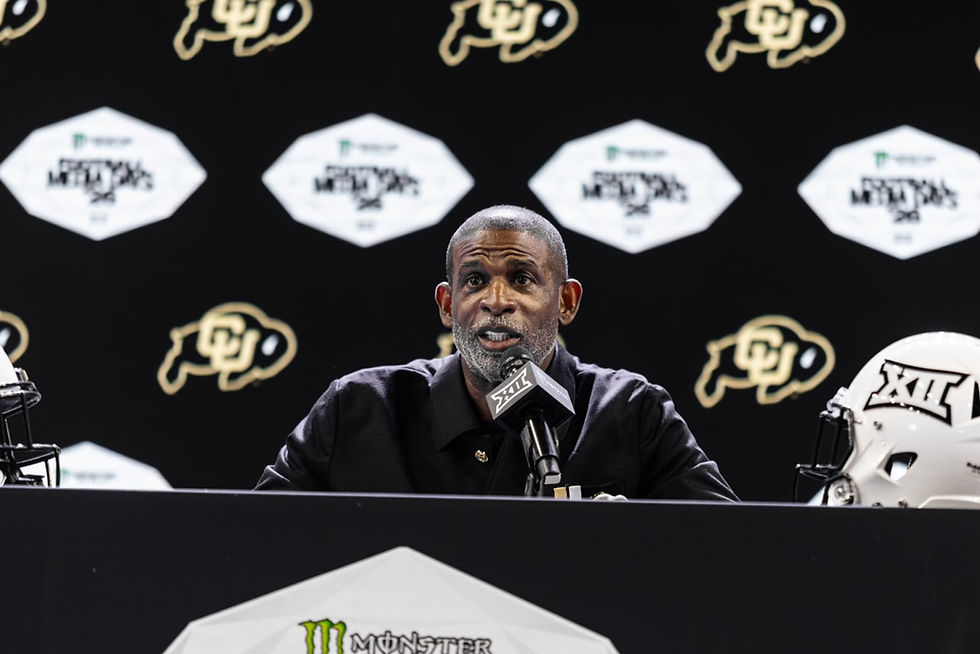
In his weekly press conference on Tuesday, Colorado Buffaloes head coach Deion Sanders spoke about that sprint.
“Everything is expeditious in this country,” he said. “Everyone wants the quick fix, the quick things. You got mail-order brides, too, right? You can get married right away. You can get a BBL. You can come in here flat as I don't know what and leave thick as a snicker. This is a different country that we’re in.”
His words, as colorful as they are, nail the state of the sport and the society that fuels it. Everyone wants the overnight fix. Everyone wants to skip the process.
The impatience isn’t isolated anymore; it’s a nationwide theme. In the past month alone, programs that started the season chasing titles like Penn State, Florida, and LSU have pulled the plug on their leaders.
This accelerated chase for championships has turned college football into one of the most cutthroat industries. Boosters move like boardroom executives, buyouts are just the cost of doing business, and no coach, no matter how beloved, is safe from the stopwatch.
Every Saturday shifts narratives, and every fan with a wi-fi connection has an opinion. The playoff field is expanding, and the transfer portal spins year-round. Patience is no longer trendy.
Fanbases claim they want identity, but instead become the main cause of toxicity. A coach doesn’t just need to win; he needs to prove he’s winning against top-tier competition and do so fast. The slow toil of development is now painted as a liability. The same virtues that built dynasties now get coaches fired.
Stability might not sell or bring clicks and followers on social media, but it wins. The schools that have found glory in the playoff era aren’t the ones that panicked. They’re the ones that stayed still long enough to let something flourish.
Michigan didn’t become Michigan again overnight. Coach Jim Harbaugh was mocked daily on talk shows, meme'd constantly, and nearly fired. For years, his name floated on hot seat lists, but the school held firm. They let him evolve and reimagine what Wolverine football could be.

Three straight playoff berths and a national championship followed, not because Harbaugh reinvented the wheel, but because Michigan discovered the value of patience.
The same goes for Georgia. The Bulldogs had lived in Alabama’s shadow for years, talented enough to contend, but never executed in the biggest moments enough to host the trophy.
Coach Kirby Smart went 8–5 his first year, lost heartbreakers in the next few, and faced the familiar whispers that come for every coach who doesn’t deliver fast enough. Six years later, he delivered back-to-back national titles and built a machine that defines the blueprint for many other programs.
Even coach Ryan Day in Columbus had to fight that same war against expectation. Despite highly successful seasons, four straight losses to bitter rival Michigan had the masses howling.
The fact that Ohio State fans flirted with the idea of moving on tells one everything about this new climate. Now, the Buckeyes are defending national champions and look primed to defend their crown this winter.
Teams that learned to balance progress with patience have found a sustainable rhythm. Those who chased shortcuts have found chaos.
When those in charge lose the ability to slow down, they lose the capacity to grow. The programs that win now are the ones that refuse to live in panic, the ones that understand that building a culture takes time.
What is transpiring in Boulder proves that point. Colorado won a single game in 2022 before Coach Prime arrived. Only three years later, top recruits choose the Buffs, and national media have made Folsom Field a staple of TV coverage.
Though the team has fallen short of expectations this fall, the bigger picture reflects a monumental positive shift for CU. The university extended Sanders this past offseason, expressing a commitment to what he's building.
Meanwhile, the sport has become so attached to instant gratification that it’s forgotten what made it great in the first place: the belief and process behind something special. Ask the old legends, the Bear Bryants, the Bobby Bowdens, the Joe Paternos, and the Bo Schembechlers what defined their eras, and they’ll talk about principles that are unrecognizable in today’s climate.
Communities used to grow with their coaches, and players stayed long enough to become folklore. Success came slowly, but it lasted.
Now, it flickers with a quick spark of relevance before the next wave of shiny new toys and discontent arrives. Players who create highlight reels with a school transfer to a different opportunity before fans can even make favorites. Coaches stand behind microphones and proclaim their visions and aspirations, knowing they might never get the time to see them through.
College football will always be about winning, but winning itself is a process, not a mere byproduct of spending.
Because if the last few years have shown anything, it’s that the sport has become attached to flash, regardless of its consequences. And the only way to save it might be to do the most countercultural thing imaginable: prioritize patience and appreciate what stillness can deliver. It just might bring the titles you’re looking for.


Comments